My homelab and the panel that runs it
/ 4 min read / #homelab #devops #proxmox #kubernetes #self-hosting
Summary
I run my sites and side projects on hardware I own, not on a cloud bill. It is two Proxmox servers plus a rack I imported from China through Alibaba, tied together by a control panel I wrote from scratch. The panel creates virtual machines and Firecracker microVMs, manages the switch and DNS, and streams logs, metrics, incidents and alerts that I can read from a phone. Nothing management-facing is exposed to the internet. Every panel and admin surface is reachable only over a WireGuard VPN.
The hardware
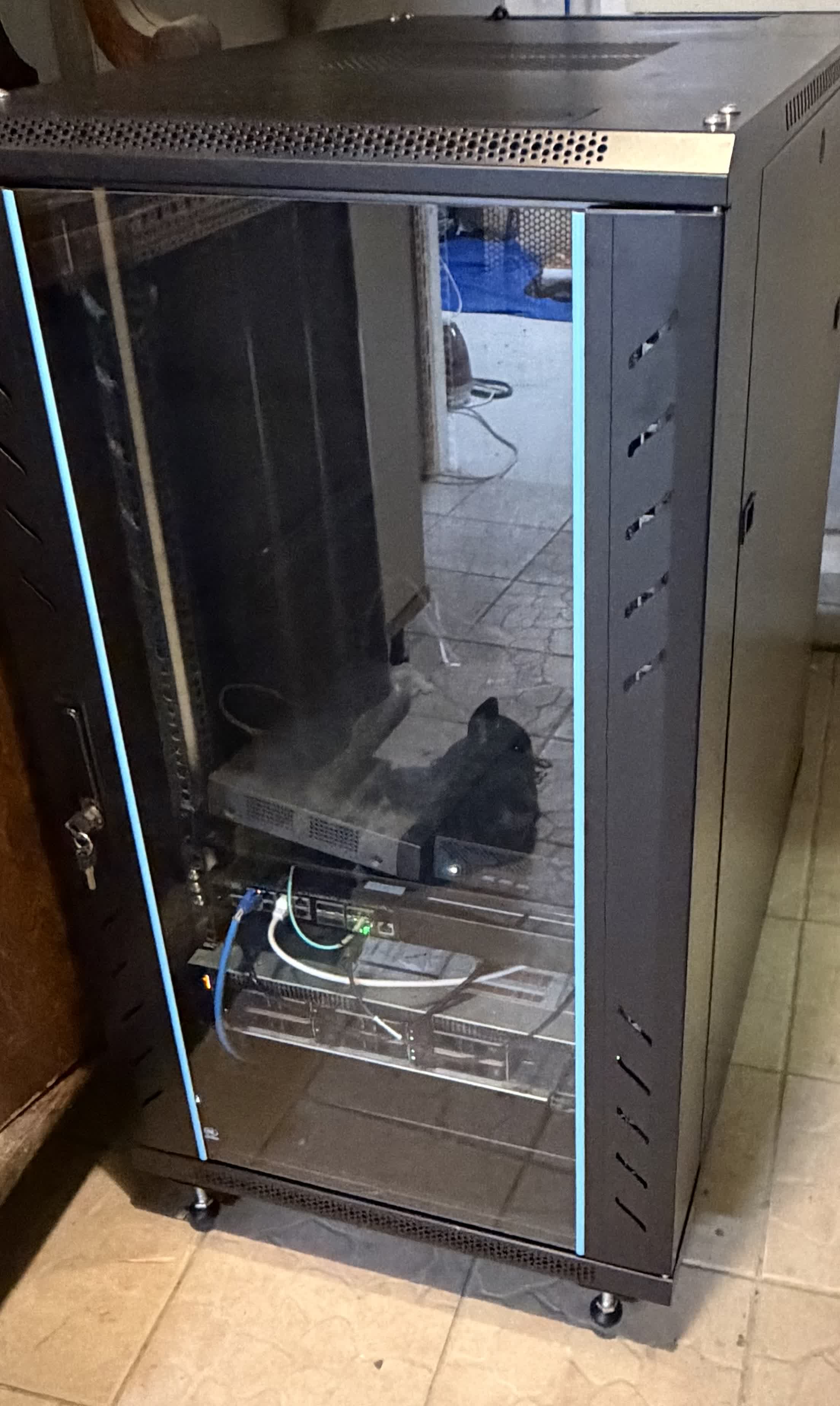
The core is two standalone Proxmox nodes. One hosts the panel and the network plumbing, the other hosts a nested KVM machine that in turn runs Firecracker microVMs. On top of them sits a small k3s cluster that actually serves the websites. Networking runs through a managed QSW-M3216R-8S8T switch, and the panel controls everything that passes through it, from ports and VLANs to what each machine is allowed to reach. Everything lives in a glass-door rack I sourced from Alibaba and shipped over, which is a cheaper way to get real rack gear than buying locally.
The panel
The heart of the setup is infra-custom, a self-hosted web panel that drives the whole homelab. The backend is Go with a hexagonal architecture and domain-driven design, the frontend is Vite with TypeScript and Tailwind, and the whole thing runs in Docker. From one place it creates cloud-init VMs and Firecracker microVMs, manages the switch, DNS and guest VPN access, and surfaces the observability data. Repeatable pieces of the estate are described as code with Terraform, and every secret, from API tokens to service credentials, lives in HashiCorp Vault rather than in a config file. Nothing sensitive is stored in plaintext anywhere.
The topology it manages, roughly:
Node A (Proxmox)                     Node B (Proxmox)
- Docker, firewall untouched         - Nested-KVM host VM
  - infra-panel                        - agent to Firecracker microVMs
  - WireGuard helper                 - k3s worker
  - Vault + agent                    - replicated copy of the panel
  - log shipper to Loki              - existing VMs, never touched
- k3s control-plane VM
  - Traefik, cert-manager, registry
  - Loki, Prometheus, Grafana, Falco
  - the websites
The k3s control plane runs a multi-member etcd quorum rather than a single node, so losing one machine does not break every deploy.
Observability
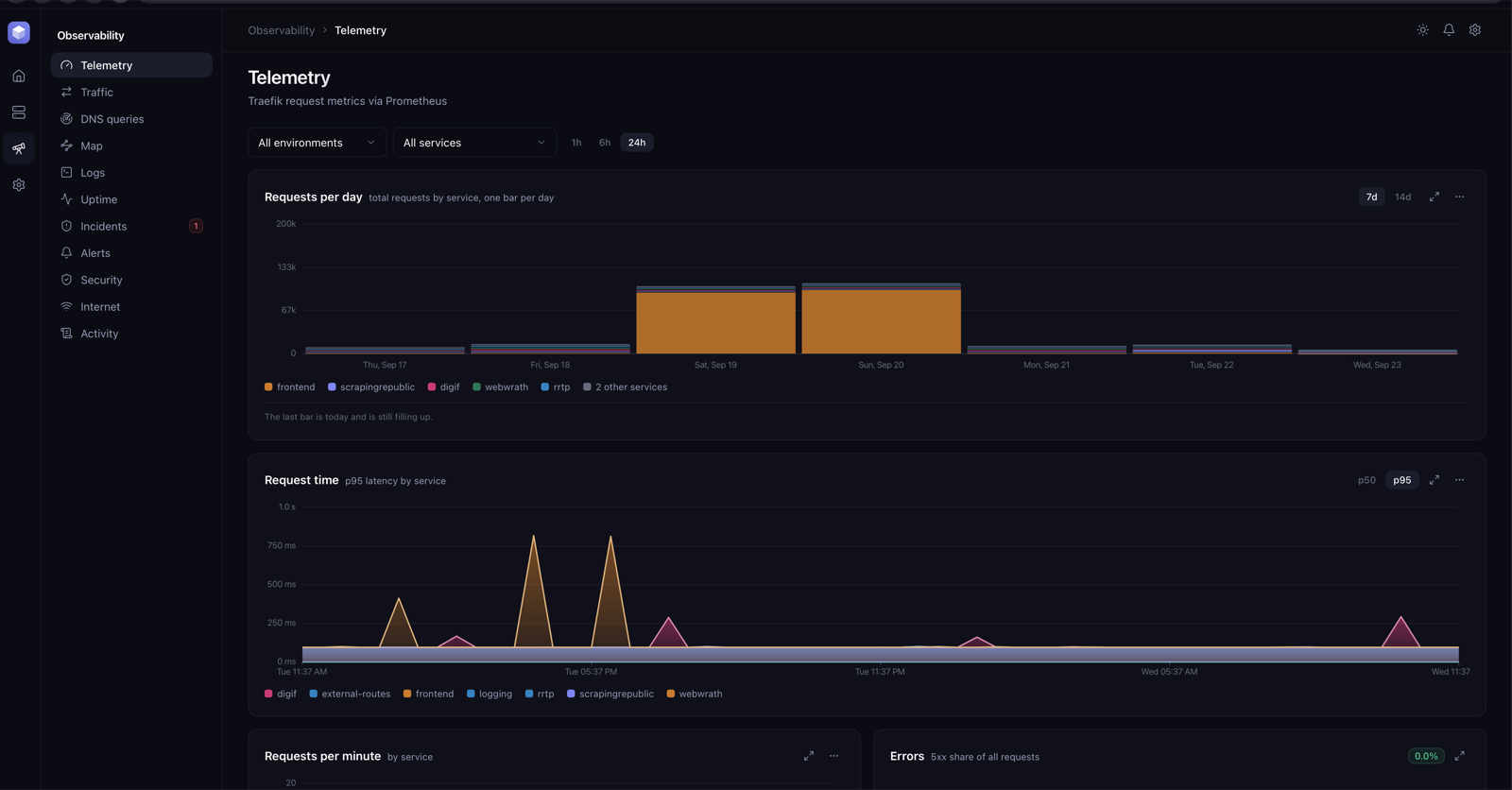
The panel ships its own observability rather than bolting on a separate tool. Traefik request metrics flow into Prometheus, and the telemetry view breaks requests and p95 latency down per service.
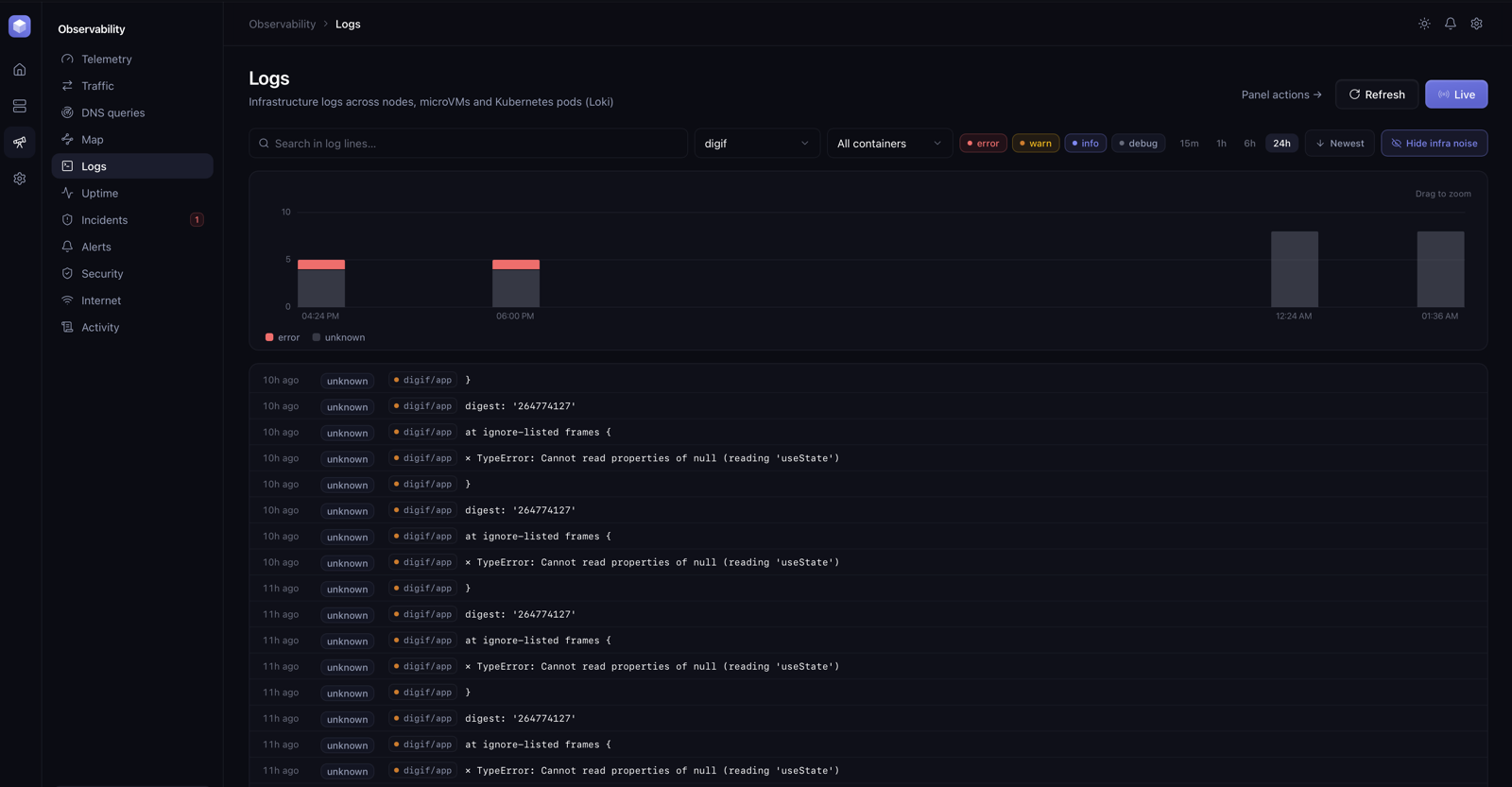
Logs from every node, microVM and Kubernetes pod are collected with Alloy into Loki, and the logs view is a live tail with level filters and infra-noise hiding.
Running it from a phone
I did not want to open a laptop to check on the rack, so the panel has a native mobile companion written in Swift. It talks to the panel only over the VPN. One tab manages the infrastructure itself: VMs, microVMs, Kubernetes, autoscaling, Traefik, nodes, the switch, devices, ISOs, ports and DNS.
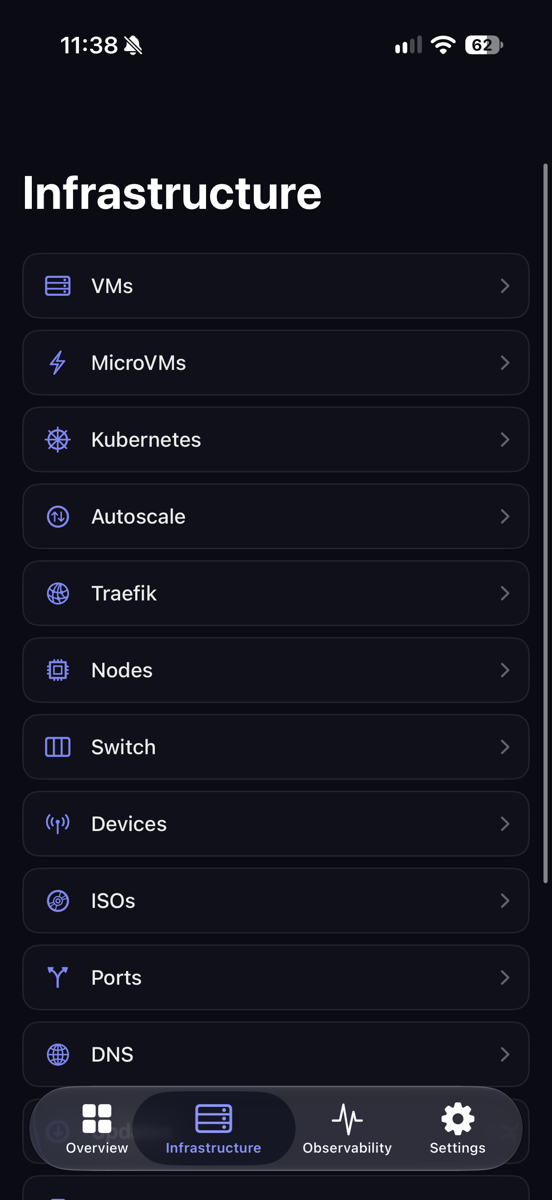
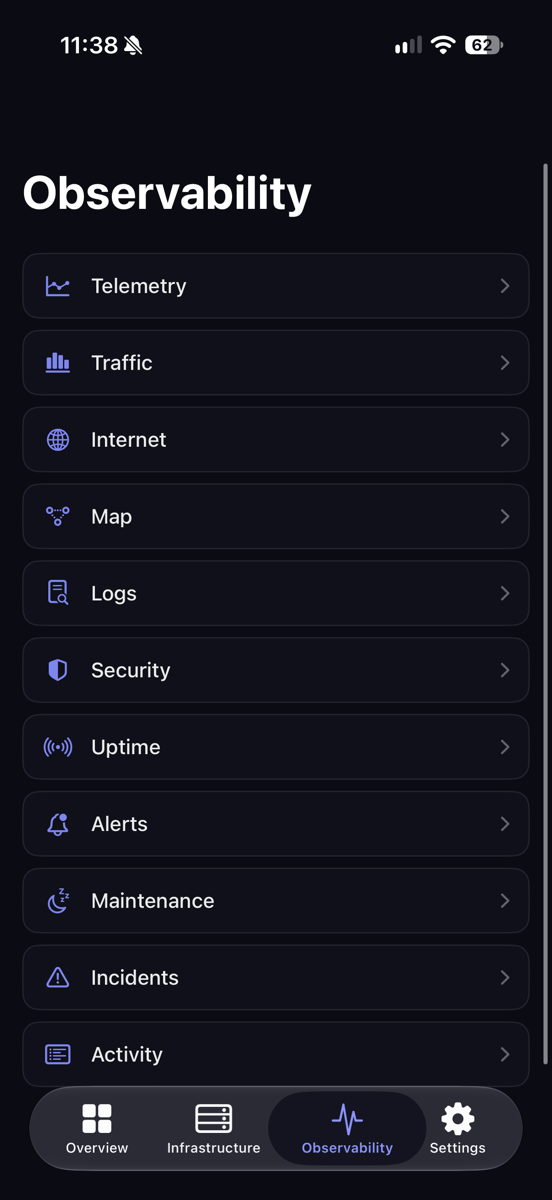
The other tab is pure observability: telemetry, traffic, the network map, logs, security, uptime, alerts, maintenance windows and incidents.
Deploys
Deployments go through deploy-infra, a set of GitHub Actions workflows that run on a self-hosted runner installed on the Proxmox node, because GitHub-hosted runners cannot reach the home LAN. A run clones the chosen ref, builds the panel image on the node with a Vite and Go multi-stage build, restarts the container, then verifies the health endpoint, checks that the iptables FORWARD chain is unchanged, and confirms a fresh WireGuard handshake. If those invariants do not hold, it aborts before deploying. Application deploys build any repository's Dockerfile on the node, push the image to the cluster registry, and apply the namespace, deployment, service and ingress on k3s, with a separate promote step to move a validated image from staging to prod.
Guardrails
The riskiest part of automating a homelab is a script touching something it should not, so the panel is boxed in. Pre-existing VMs report as unmanaged and the panel refuses every action on them, start, stop, delete or ports. It only sees and edits router redirections it created, which are prefixed so it can never touch WireGuard or anything else. Docker is configured to never modify the firewall, because WireGuard forwarding depends on it. Forbidden storage pools are refused at creation. The root password given when adding a node is used once to bootstrap a limited API token and is never stored.
Takeaways
Building the panel taught me more devops than any tutorial would. Cloud-init and Firecracker for fast machines, Terraform to describe the repeatable parts as code, k3s with a real etcd quorum so a single node loss is survivable, Prometheus, Loki and Alloy for a full observability stack, WireGuard for access and HashiCorp Vault for every secret, and GitHub Actions on a self-hosted runner to tie deploys to the same guardrails as everything else. Owning the metal end to end is the point.